We help property owners throughout Florida and Colorado navigate mold-related insurance claims resulting from covered water damage, hidden moisture, plumbing leaks, roof leaks, or storm-related water intrusion.
Mold often begins with hidden moisture that goes unnoticed after a plumbing leak, roof leak, or water damage event. If left untreated, mold can spread quickly and affect walls, ceilings, flooring, cabinetry, insulation, and indoor air quality.
The Claim Company helps property owners throughout Florida and Colorado identify the source of moisture, document mold-related damage, and prepare a well-supported insurance claim.
Mold can develop after leaks, flooding, plumbing issues, or water intrusion if the moisture is not properly addressed.
Moisture behind walls, under flooring, or inside cabinets can lead to mold growth that is not immediately visible.
Slow plumbing leaks can create ongoing moisture problems that may lead to mold damage over time.
Stains, discoloration, and mold growth on ceilings or walls may point to leaks or hidden water damage.
Storm-related roof leaks, window leaks, or water intrusion can create conditions for mold growth.
Mold claims can become disputed when the cause, timing, coverage, or extent of the damage is unclear.
Mold can develop when moisture remains trapped inside a property after a roof leak, plumbing issue, storm event, or covered water damage loss. In Florida, humidity and storm-related water intrusion can create ideal conditions for mold growth. In Colorado, roof leaks, plumbing failures, snowmelt-related moisture, and hidden water damage can also lead to mold concerns.
Because mold often starts behind walls, under flooring, inside cabinets, or near ceiling areas, proper inspection and documentation are important before repairs begin.
We inspect the property and identify all visible damage.
We review your insurance policy and coverage details.
We prepare photos, reports, estimates, and supporting evidence.
We communicate with the insurance company and advocate on your behalf.
Property insurance may provide coverage for mold damage when the mold is related to a covered water damage event, such as a sudden plumbing leak, roof leak caused by covered damage, appliance leak, or storm-related water intrusion. Coverage depends on the policy language, cause of loss, timing, documentation, and carrier review.
Mold claims can become complicated when the insurance company disputes the source of moisture, timing of the damage, maintenance issues, or whether the mold is connected to a covered event.
Mold can spread when moisture remains inside the home after a leak, storm, plumbing failure, or water damage event. Even if the surface looks dry, moisture may still exist behind walls, under flooring, inside cabinets, or in insulation.
If mold-related damage is not properly inspected and documented, property owners may face disputed coverage, incomplete repairs, or out-of-pocket restoration costs.
Mold is not always visible at first. It can grow behind walls, under flooring, inside cabinets, above ceilings, in closets, or near HVAC systems. If hidden mold is missed, the damage may continue to spread and become more expensive to address.
A persistent damp or musty smell may indicate hidden mold or trapped moisture.
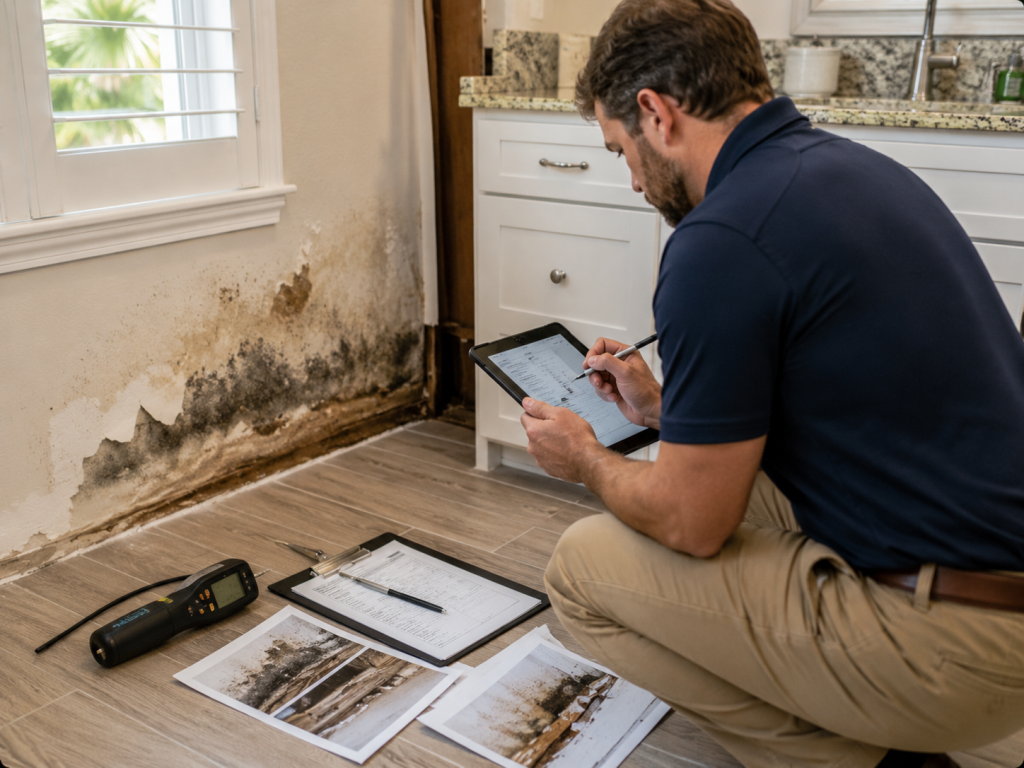
Dark spots, stains, or unusual markings can be signs of mold growth.
Water stains on ceilings may point to roof leaks, plumbing issues, or attic moisture.
Moisture behind surfaces can cause paint or wallpaper to bubble, crack, or separate.
Buckling, soft spots, or lifting floors may indicate moisture beneath the surface.
Mold can develop behind or under cabinets affected by plumbing leaks or water intrusion.
Black, green, gray, or brown spots should be documented and professionally reviewed.
Unusual indoor humidity or allergy-like symptoms may point to moisture or mold concerns.
Mold damage should be properly documented before cleanup or repairs begin. Photos, moisture readings, inspection notes, repair estimates, and supporting reports can help show how the mold is connected to covered water damage or property damage.
The Claim Company helps property owners throughout Florida and Colorado organize mold-related documentation and move through the insurance claim process with professional guidance.
Mold damage claims can become difficult because the insurance company may question what caused the mold, when it started, whether it was connected to a covered event, or whether the damage could have been prevented.
Unlike sudden visible damage, mold often develops over time after moisture is missed. This can lead to disputes about coverage, timing, documentation, and the full scope of repairs.
The Claim Company helps property owners review mold-related claims, identify supporting documentation, and advocate throughout the claim process.
The Claim Company helps property owners throughout Florida and Colorado with mold damage claims related to covered water damage, hidden moisture, plumbing leaks, roof leaks, storm damage, and water intrusion. Our team helps inspect, document, and manage the claim process so you can move forward with greater confidence.
Serving property owners across South Florida, Central Florida, Orlando, Miami, Fort Lauderdale, Weston, West Palm Beach, and surrounding Florida communities.
Serving property owners across Colorado with support for mold damage, hidden moisture, water damage, roof leaks, plumbing leaks, storm damage, and related property insurance claims.
Helping property owners, business owners, landlords, property managers, and commercial property owners throughout Florida and Colorado.
Mold damage should be documented as soon as it is discovered. Delays can make it harder to connect the mold to the original water damage event and may allow the damage to spread into additional materials or rooms.
If you notice musty odors, staining, visible mold, moisture, peeling paint, warped flooring, or water damage, take photos, keep records, and get professional claim guidance before accepting a settlement or beginning major cleanup.
Mold damage is not always visible at first. A musty odor, water stain, damp area, or hidden leak can indicate moisture problems that may continue to spread if they are not documented properly.
The Claim Company helps property owners throughout Florida and Colorado review mold damage, document the source of moisture, and move through the claim process with professional guidance.
Mold coverage depends on your policy and the cause of the mold. Mold may be covered when it results from a covered water damage event, such as a sudden plumbing leak, burst pipe, storm-related leak, or covered water intrusion.
Yes. If mold develops because of a covered water damage event, it may be part of the claim. Documentation of the original water loss and the mold damage is very important.
Common signs include musty odors, wall discoloration, ceiling stains, peeling paint, warped flooring, visible mold spots, and moisture near cabinets, walls, or flooring.
Take photos, document the leak, avoid throwing away damaged materials too soon, keep repair records, and get professional claim guidance to help connect the mold to the original water damage.
Yes. Storm-related roof leaks, window leaks, water intrusion, or hidden moisture can create conditions for mold growth if the affected areas are not properly dried and documented.
A denied mold claim does not always mean the process is over. The Claim Company can review the denial, inspect related damage, organize documentation, and help you understand your available options.
Yes. If the settlement does not cover the full scope of mold-related damage, moisture damage, remediation, or repairs, we can review the claim and help identify what may be missing.
Whether your mold issue started after a leak, water damage, storm damage, hidden moisture, or plumbing problem, The Claim Company is ready to help you take the next step.